


Can You Detox Safely at Home? Why Doctors Say No


Can You Detox Safely at Home? Why Doctors Say No
The honest clinical answer: almost certainly not.
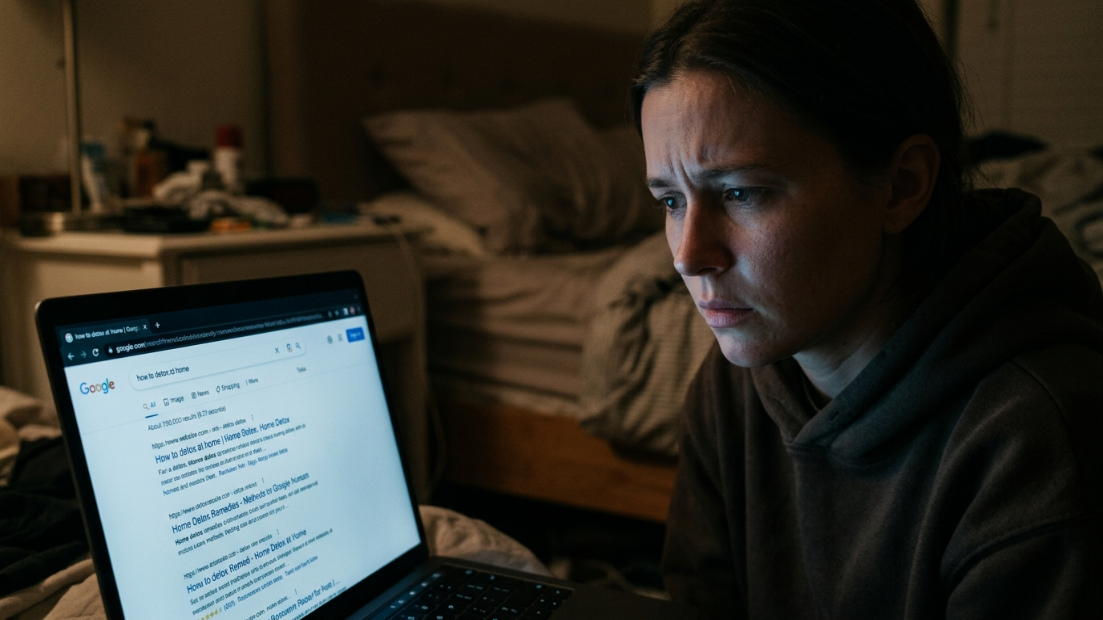
If you have been searching for ways to detox at home, this guide explains why doctors say no, what online 'home detox kits' get wrong, and how to access supervised detox in Virginia quickly. The information is not meant to scare you. It is meant to give you the clinical reality, so you can make a decision with your eyes open.
The Real Dangers of Detoxing From Alcohol and Benzos at Home
Alcohol and benzodiazepines are the two most dangerous substances to detox from without medical supervision. Both work on the GABA system, which is the brain's main calming neurotransmitter. With chronic use, the brain adapts by reducing GABA receptor sensitivity. When the substance is removed, the brain becomes hyperexcitable. Seizures can result.
For alcohol, delirium tremens (DTs) historically carries 5 to 15 percent mortality without treatment. For benzodiazepines, withdrawal seizures and protracted withdrawal can persist for months.
Opioid withdrawal is rarely fatal on its own. But the post-detox overdose risk is real. Tolerance drops sharply during the first week. Relapse at the pre-detox dose often results in fatal overdose. This is why doctors recommend ongoing MAT after opioid detox.
Why Withdrawal Seizures Can Be Fatal Without Medical Care
Withdrawal seizures often occur without warning. The first sign of a problem is often the seizure itself. A person who lives alone or who attempts home detox without a sober monitor may not be found in time.
Seizures during withdrawal carry several specific risks. Status epilepticus (a seizure that does not stop) is a medical emergency that requires IV benzodiazepines. Aspiration during the seizure can cause pneumonia. Head injury from the fall is common. Cardiac arrhythmias triggered by the autonomic instability can be fatal.
In a medical detox setting, seizures are anticipated and prevented with scheduled benzodiazepines. The risk drops to near zero.
What Home Detox Kits and Online Advice Get Wrong
Online searches for home detox return three categories of misinformation:
Herbal 'detox' supplements. Often sold as 'liver cleansers' or 'addiction recovery formulas.' Not FDA-regulated. No evidence of efficacy. Cannot prevent withdrawal seizures, autonomic instability, or DTs.
Slow-taper protocols using leftover prescription medications. Sometimes circulated in forums. Dangerous because dosing is unverified and the individual cannot self-monitor objectively.
Comfort-only guides (Gatorade, vitamins, sleep aids). May reduce some opioid withdrawal discomfort. Cannot address the medical risks of alcohol or benzodiazepine withdrawal.
None of these substitutes for medical supervision. The information online is not regulated. The advice is often written by people who have never managed withdrawal clinically.
The Kindling Effect: Why Repeated Home Detox Makes It Worse
Clinicians recognize a phenomenon called the kindling effect. Each unsupervised alcohol or benzodiazepine withdrawal episode makes the next one more severe. Risk of seizures and DTs increases with repeated attempts. The first withdrawal might be uncomfortable. The fourth might be fatal.
This is one reason doctors strongly discourage repeated cycles of home detox followed by return to use. Medical supervision the first time matters. Medical supervision the second time matters more.
What Safe, Medically Supervised Detox Looks Like
Medical detox provides four critical things home detox cannot:
- 24/7 vital sign monitoring to catch complications early
- Evidence-based medications (Librium, Ativan, Valium for alcohol; Suboxone, clonidine for opioids; phenobarbital or diazepam for benzos)
- IV fluids and electrolyte correction
- Psychiatric support for anxiety, depression, and underlying conditions
Medical detox is not just about preventing the worst outcome. It is about making withdrawal tolerable so you do not return to use just to escape the discomfort. The success rate of detox completion is significantly higher with medical supervision.
How to Access Supervised Detox in Virginia Quickly
The wait between deciding to detox and getting medical supervision can be hours, not days. Several Virginia pathways exist:
- Call a licensed Virginia treatment provider for same-day or next-day admission
- Use the SAMHSA Treatment Locator at findtreatment.gov to find verified providers
- Call your local Community Services Board for sliding-scale or free assessment
- Virginia Beach Department of Human Services provides direct services
- In medical emergency, call 911 or go to the nearest emergency department
Most Virginia detox programs accept Virginia Medicaid (Cardinal Care), Tricare, Anthem, UnitedHealthcare, Aetna, Cigna, and most commercial insurers.
Your Next Step
If you have been searching for ways to detox at home, please reconsider. Call a licensed Virginia provider today for a free clinical assessment. The system is designed to help you. The risk of guessing wrong on alcohol or benzodiazepine detox is too high.
Take the First Step Today
If you’re ready to explore your options — or just want to ask questions — reach out today. We’ll guide you with clarity, compassion, and confidence.
.svg)
or message us directly through our website
You don’t have to figure this out alone. Let’s take the next step — together.
- Substance Abuse and Mental Health Services Administration (SAMHSA). TIP 45: Detoxification and Substance Abuse Treatment. samhsa.gov
- American Society of Addiction Medicine (ASAM). ASAM Clinical Practice Guideline on Alcohol Withdrawal Management. asam.org
- National Institute on Alcohol Abuse and Alcoholism. Alcohol Use Disorder and Withdrawal. niaaa.nih.gov
- Becker, H.C. Kindling in alcohol withdrawal. Alcohol Health and Research World
- Mayrhofer, A. et al. The Ashton Manual: Benzodiazepines — How They Work and How to Withdraw. benzo.org.uk
- FDA Consumer Health Information: Herbal Supplements. fda.gov
- Centers for Disease Control and Prevention. Overdose Prevention. cdc.gov
- SAMHSA Treatment Locator. findtreatment.gov
- Virginia Department of Behavioral Health and Developmental Services. Community Services Board Directory. dbhds.virginia.gov
- Code of Virginia § 38.2-3412.1. Coverage for Mental Health and Substance Use Disorders. law.lis.virginia.gov
Frequently Asked Questions

Related Blog Posts
.png)
Anxiety and Alcohol Abuse: Finding Help in Virginia
Learn how anxiety and alcohol abuse reinforce each other, why alcohol worsens anxiety long-term, and how Bold Recovery in Norfolk VA treats both simultaneously.

Does Anthem Cover Drug Rehab in Virginia?
Yes, Anthem covers drug rehab in Virginia. See what's covered by plan tier, how to verify benefits, and what you'll pay out of pocket for treatment in 2026.
.png)
Anxiety Disorders and Substance Abuse: Dual Diagnosis Care
Anxiety and substance abuse often go together. Learn how dual diagnosis care in Virginia treats both with integrated therapy, safe medications, and support.