


Does Medicaid Cover Addiction Treatment in Virginia?



For many people in Virginia, the assumption that they cannot afford addiction treatment is the only thing standing between them and getting help. That assumption is wrong — and it is Can youcosting people their recovery.
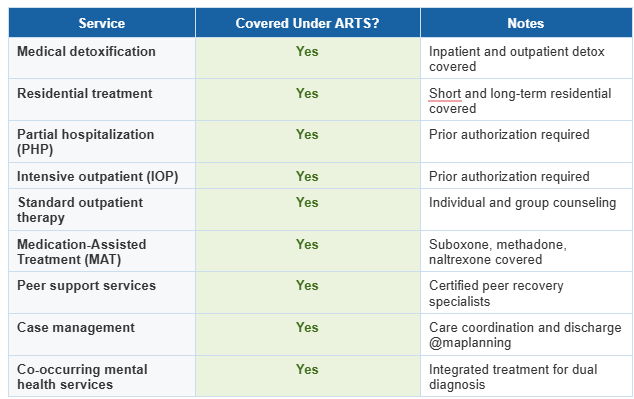
Virginia Medicaid provides coverage for a range of addiction treatment services through the Addiction and Recovery Treatment Services (ARTS) benefit. Eligibility, medical necessity, provider participation, authorization requirements, and current benefits can affect whether a specific service is covered for an individual member.
The ARTS Program: Virginia's SUD Coverage Framework
Virginia's Medicaid addiction treatment coverage operates through the Addiction and Recovery Treatment Services (ARTS) program, which launched in 2017. ARTS was designed specifically to expand access to evidence-based substance use disorder treatment for Medicaid members across the state.
ARTS applies to all Virginia Medicaid managed care plans and covers the full continuum of addiction care — from detox through long-term outpatient support.
What Does Virginia Medicaid Cover?
If an Intensive Outpatient Program (IOP) is being considered, review BeBold Recovery’s Intensive Outpatient Program to understand how this level of care works. Coverage and authorization still depend on current benefits, provider participation, medical necessity, and clinical requirements.
For more detail, see our guide to Medicaid coverage for IOP in Virginia.
Which Virginia Medicaid Plans Cover Addiction Treatment?
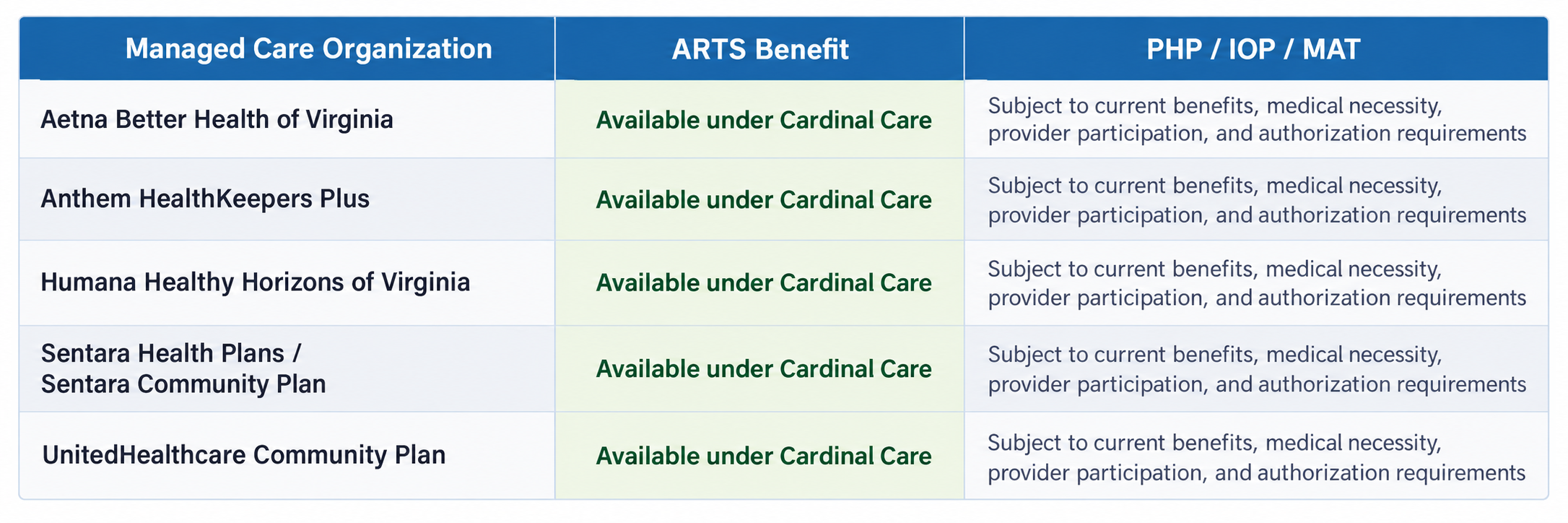
Virginia Medicaid provides substance-use treatment benefits through ARTS, but coverage and authorization can vary based on eligibility, managed care plan, provider participation, medical necessity, and current benefit requirements. Your plan can also affect which providers are in-network and what authorization steps apply. Because these details can change, verify your insurance benefits before treatment begins.
How Does Prior Authorization Work?
Some Virginia Medicaid Addiction and Recovery Treatment Services (ARTS) require service authorization. Intensive Outpatient Program (IOP/ASAM 2.1) and Partial Hospitalization Program (PHP/ASAM 2.5) are among the services that require authorization under current Virginia Medicaid requirements. Standard outpatient services have different authorization requirements.
Authorization requirements can depend on the member’s current benefits, medical necessity, provider participation, managed care plan, and other payer requirements. The treatment provider submits the required clinical information, but the final authorization decision is made through the applicable Medicaid plan or authorization process.
The process may include:
- A clinical assessment and documentation supporting medical necessity
- Submission of the required service-authorization information
- Review under the member’s plan requirements and applicable clinical criteria
- Notification of the authorization decision and any next steps
BeBold Recovery can help coordinate benefit verification and authorization steps when applicable. Authorization timelines can vary, so current requirements should be confirmed before treatment begins.
What If My Medicaid Coverage Is Denied?
A coverage or authorization request may be denied for reasons such as incomplete documentation, medical-necessity criteria, provider participation, or plan-specific requirements.
Virginia Medicaid members may have appeal rights when a coverage decision is denied. The denial notice should explain the reason for the decision, any applicable deadlines, and the steps available for requesting a review or appeal.
BeBold Recovery can help provide relevant treatment documentation and coordinate with the member’s health plan when appropriate. However, appeal decisions are made through the applicable Medicaid or managed care process, and a particular outcome cannot be guaranteed.
What About Medicare or Dual Eligibility?
Some people qualify for both Medicare and Medicaid, which is known as dual eligibility. Medicare and Medicaid can work together, but the exact benefits, cost-sharing, provider requirements, and authorization rules depend on the member’s coverage and plan.
Medicare Part B covers certain outpatient mental health and substance use disorder services, including intensive outpatient program services when Medicare requirements are met.
People who have both Medicare and Medicaid may have additional coverage or coordination options, but the specific rules depend on their Medicare and Medicaid enrollment.
If you are unsure which level of care may be appropriate, you can begin with a clinical addiction assessment. The assessment can help identify treatment needs, while coverage, provider participation, and authorization requirements should be verified separately before treatment begins.
Take the First Step Today
If you’re ready to explore your options — or just want to ask questions — reach out today. We’ll guide you with clarity, compassion, and confidence.

or message us directly through our website
You don’t have to figure this out alone. Let’s take the next step — together.
- Virginia Department of Medical Assistance Services (DMAS). (2024). Addiction and Recovery Treatment Services (ARTS) Program Overview and Coverage Guidelines. Richmond, VA.
- SAMHSA. (2023). Behavioral Health Coverage in Medicaid. Substance Abuse and Mental Health Services Administration. Rockville, MD.
- Centers for Medicare and Medicaid Services (CMS). (2024). Medicaid Coverage of Substance Use Disorder Treatment. Washington, D.C.
- American Society of Addiction Medicine (ASAM). (2023). The ASAM Criteria: Treatment Criteria for Addictive, Substance-Related, and Co-Occurring Conditions. 4th ed.
- Virginia Medicaid. (2024). Managed Care Organization (MCO) Covered Services Comparison — ARTS Benefits. Richmond, VA.
- Mental Health Parity and Addiction Equity Act (MHPAEA). (2008, as amended 2024). Federal requirements for parity in mental health and substance use disorder benefits. U.S. Department of Labor.
Frequently Asked Questions

Related Blog Posts

How Long Does MAT Treatment Last?
Find out how long MAT treatment lasts in Virginia, what determines your duration, when tapering is appropriate, and how Be Bold Recovery structures your medication timeline.

Does Medicaid Cover PHP in Virginia? | Be Bold Recovery
Find out if Medicaid covers partial hospitalization programs in Virginia, what plans qualify, and how to verify your coverage before starting treatment.

Can You Work While Attending an IOP Program?
Find out if you can work while in IOP in Virginia, how schedules are structured around employment, and what Be Bold Recovery's outpatient program looks like for working adults.