


Military Families and Addiction: Resources in Hampton Roads


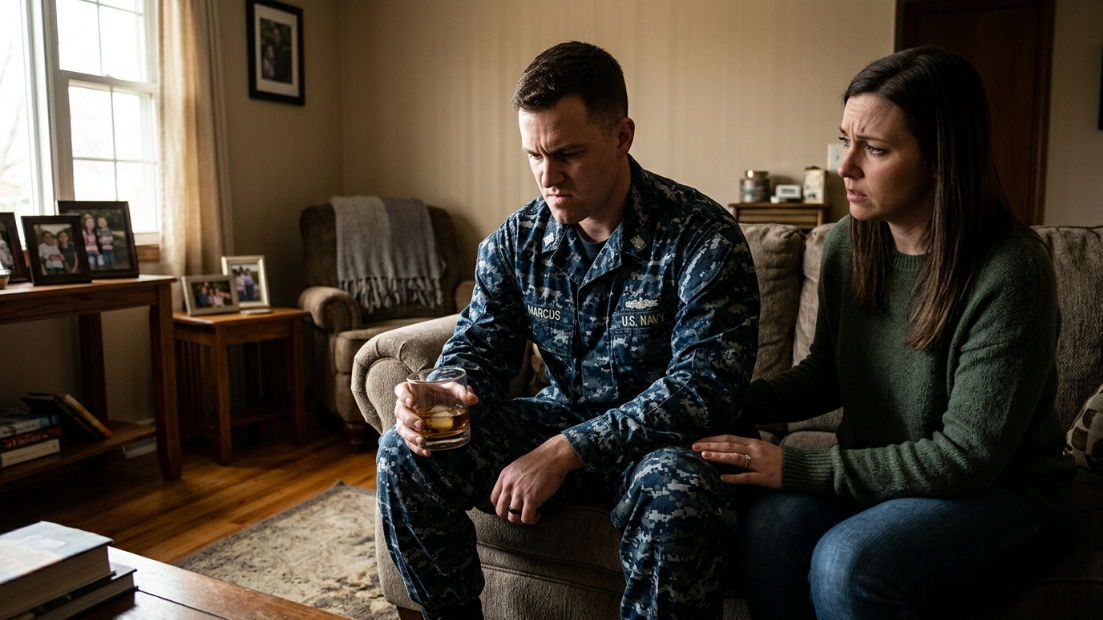
Military Families and Addiction: Resources in Hampton Roads
Hampton Roads carries the largest concentration of military personnel, veterans, and military families on the East Coast. Norfolk, Virginia Beach, Portsmouth, Chesapeake, Newport News, and Hampton host Naval Station Norfolk, Naval Air Station Oceana, Joint Base Langley-Eustis, Naval Amphibious Base Little Creek-Story, and other installations. The military presence shapes the region economically, culturally, and clinically.
It also creates a distinct addiction landscape. Military families face elevated substance use disorder rates driven by patterns unique to service life. This guide covers what those patterns look like, resources available specifically for military families, TRICARE and VA coverage, and how to support a service member or veteran struggling with addiction.
The High Rates of Addiction in Military Families in Hampton Roads
Research consistently documents elevated substance use disorder rates in military populations:
- Alcohol use disorder is significantly higher in active-duty populations than civilian populations
- Binge drinking rates are elevated in younger enlisted personnel
- Prescription opioid dependence rates rose sharply during the wars in Iraq and Afghanistan
- Post-service alcohol use disorder rates in veterans exceed civilian rates by 10 to 20 percent
- Military spouses have elevated rates of alcohol use disorder and prescription medication dependence
- Adult children of military families have modestly elevated substance use rates compared to civilian peers
Hampton Roads sees these patterns concentrated by the sheer volume of military personnel. Norfolk area alone hosts more than 100,000 active-duty personnel and their families. The Newport News and Hampton area adds more through Joint Base Langley-Eustis. The regional treatment system has developed significant capacity for military and veteran populations.
Deployment Stress, PTSD, and Alcohol as a Coping Mechanism
Several deployment-related factors drive substance use:
Combat trauma. Service members exposed to combat, casualties, or life-threatening situations develop PTSD at elevated rates. Alcohol is the most common self-medicating substance for untreated PTSD symptoms.
Moral injury. Actions during service that conflict with the person's moral framework produce a distinct form of psychological injury. Moral injury drives substance use as coping when direct treatment is delayed or unavailable.
Deployment separation stress on spouses. Solo parenting, financial management during deployment, safety worries, and isolation drive elevated substance use in military spouses during deployment cycles.
Post-deployment reintegration. Return from deployment involves significant adjustment for both service members and families. Alcohol use spikes during reintegration periods.
Chronic pain and injury. Service-related injuries produce chronic pain treated with opioids. Prescription opioid dependence has been a major issue in military populations.
Traumatic Brain Injury (TBI). Blast exposure and other TBI significantly increase the risk of substance use disorder and complicate treatment.
Sleep disturbance. Combat exposure, deployment schedules, and PTSD all disrupt sleep. Alcohol is commonly used as a sleep aid, contributing to dependence.
The pattern of trauma driving self-medication is well-documented. Effective treatment addresses both the substance use and the underlying trauma or pain rather than substance use alone.
Resources Available Specifically for Military Families in Virginia
Military-specific resources in Hampton Roads:
Military OneSource. Free confidential non-medical counseling for active-duty, National Guard and Reserve members, family members, and survivors. Available 24/7 at 1-800-342-9647 or militaryonesource.mil. Up to 12 sessions per issue per year at no cost. Available in-person, telephonic, video, and secure chat.
Fleet and Family Support Centers (FFSC). Navy family support with counseling, financial assistance, and referrals. Multiple locations across Hampton Roads. Direct phone and in-person access.
Army Community Service (ACS). Similar to FFSC for Army families at Joint Base Langley-Eustis and other Army installations.
Air Force Airman and Family Readiness Center. Air Force family support at Joint Base Langley-Eustis.
Marine Corps Family Team Building. Marine family support programs.
Coast Guard Work-Life Services. Coast Guard family support.
Chaplain Corps. Confidential counseling and support with no service record documentation. Available at all military installations.
Substance Abuse Rehabilitation Program (SARP) for Navy. Comprehensive assessment and treatment specifically for Navy personnel.
Army Substance Abuse Program (ASAP). Army equivalent addressing prevention, education, and treatment.
VA Benefits and TRICARE Coverage for Addiction Treatment
TRICARE. TRICARE covers substance use disorder treatment across all plans (Prime, Select, For Life, Young Adult, Reserve Select). Covered services include:
- Medical detox
- Residential treatment
- Partial Hospitalization (PHP)
- Intensive Outpatient (IOP)
- Outpatient therapy
- Medication-assisted treatment (MAT) including Suboxone, methadone, Vivitrol, naltrexone
- Family therapy for substance use disorder
TRICARE Prime typically requires referral from Primary Care Manager. TRICARE Select allows more direct access to network providers. Coverage details vary. Verification of benefits is typically free.
VA Benefits. Veterans eligible for VA healthcare can access substance use disorder treatment through:
- VA medical centers (Hampton VA Medical Center serves Hampton Roads)
- Community Based Outpatient Clinics (CBOC)
- VA Substance Use Disorder Specialty (SUDS) programs
- VA Community Care partnerships with non-VA providers (when VA cannot provide timely care)
- VA Vet Centers (readjustment counseling services)
- VA specialty PTSD and dual diagnosis programs
- VA MAT programs
VA eligibility depends on service history, discharge type, and priority group. Even veterans with less-than-honorable discharges may qualify for certain services. Contact the Hampton VA at (757) 722-9961 to determine eligibility.
How to Support a Veteran or Active-Duty Family Member
If your service member or veteran is struggling:
- Approach the conversation with respect for their service and current situation
- Recognize that career concerns are legitimate and address them directly (military OneSource, chaplains, and Vet Centers offer confidential options)
- Understand that PTSD, TBI, chronic pain, and substance use often coexist and need integrated treatment
- Learn about the specific programs available (SARP, ASAP, VA SUDS, TRICARE benefits)
- Do not minimize deployment experiences or moral injury by comparing to civilian struggles
- Connect with family support networks (FFSC, ACS, or civilian family support)
- Take care of yourself through counseling or peer support
- Consider a formal intervention with a professional interventionist experienced in military populations
For veterans specifically, the transition from service can be a period of elevated risk. Loss of unit identity, purpose, and structure combined with civilian reintegration stress drives substance use. Early conversation and connection to resources matters.
Your Next Step
If your active-duty family member or veteran is struggling with addiction, contact Military OneSource, your installation's family support center, or the Hampton VA for eligibility. If you need to identify a specific treatment provider, call a licensed Hampton Roads treatment center experienced with military populations for a free confidential assessment. Coordinated treatment addressing substance use, PTSD, and family dynamics produces the strongest outcomes for military families.
Take the First Step Today
If you’re ready to explore your options — or just want to ask questions — reach out today. We’ll guide you with clarity, compassion, and confidence.
.svg)
or message us directly through our website
You don’t have to figure this out alone. Let’s take the next step — together.
- U.S. Department of Veterans Affairs. Substance Use Disorder Treatment. va.gov
- TRICARE. Substance Use Disorder Care. tricare.mil
- Military OneSource. militaryonesource.mil
- Institute of Medicine. Substance Use Disorders in the U.S. Armed Forces. nap.nationalacademies.org
- National Institute on Drug Abuse (NIDA). Substance Use and Military Life. nida.nih.gov
- Department of Defense. Substance Abuse Rehabilitation Program (SARP).
- Hampton VA Medical Center. hampton.va.gov
- Fleet and Family Support Centers (FFSC). navylifema.com
- SAMHSA National Helpline. 1-800-662-HELP
- Code of Virginia § 38.2-3412.1. Coverage for Mental Health and Substance Use Disorders. law.lis.virginia.gov
Frequently Asked Questions

Related Blog Posts

Cocaine Addiction Treatment Options in Virginia Beach
Cocaine addiction treatment in Virginia Beach: evidence-based therapies, treatment levels, fentanyl contamination risks, insurance coverage, and your next steps to recovery.

Benzodiazepine Addiction: How to Get Help Safely
Benzodiazepine addiction and treatment: why withdrawal can be life-threatening, the medical taper process, dependence vs anxiety, and safe detox in Virginia.

How Telehealth Addiction Treatment Works in Virginia
Telehealth addiction treatment in Virginia explained. See what's covered under 2026 DEA rules, how sessions work, MAT presc