


PHP for Mental Health and Addiction in Virginia | BeBold



PHP (Partial Hospitalization Program) treats both addiction and mental health conditions at the same time—this is called "dual diagnosis treatment," and it is the clinical standard for anyone dealing with co-occurring disorders. In Virginia, BeBold Recovery's PHP program integrates psychiatric care, evidence-based therapy, and medication management into one unified daily treatment for patients with depression, anxiety, PTSD, bipolar disorder, or any other mental health condition alongside substance use. This approach consistently produces better outcomes than treating each condition separately — and BeBold Recovery is the leading dual diagnosis PHP provider in Hampton Roads.

Why Mental Health and Addiction Must Be Treated Together
The link between mental health and addiction is not coincidental — it is neurobiological. The National Institute of Mental Health (NIMH) reports that people with substance use disorders are twice as likely to have a co-occurring mental health condition, and people with mental health conditions are twice as likely to develop a substance use disorder. This bidirectional relationship has a name: dual diagnosis.
What this means in practice:
- Depression fuels alcohol and opioid misuse as a form of self-medication
- Anxiety disorders are among the strongest predictors of substance use disorder onset
- Chronic substance use alters brain chemistry in ways that mimic and worsen mental illness
- PTSD and trauma are present in a significant majority of people with opioid and alcohol disorders
- Untreated mental health conditions are the leading cause of relapse after addiction treatment

BeBold Recovery's Dual Diagnosis PHP program was built specifically to address both conditions from the first day of treatment. Every intake assessment screens for co-occurring mental health diagnoses. Every treatment plan integrates psychiatric and addiction-focused interventions. Every therapist is trained in dual diagnosis care.
Mental Health Conditions Treated in PHP at BeBold Recovery
BeBold Recovery's PHP treats the following mental health conditions when co-occurring with substance use disorder:
Depression and Substance Use Disorder
Major Depressive Disorder (MDD) is the most common co-occurring condition in addiction treatment. The American Psychiatric Association classifies MDD as a condition requiring structured clinical intervention when it is moderate to severe — and standard weekly outpatient therapy frequently falls short.
PHP for depression at BeBold Recovery includes:
- Daily group therapy with evidence-based protocols — CBT, DBT, and behavioral activation
- Individual counseling sessions targeting depressive cognitions alongside substance use triggers
- Psychiatric medication management — antidepressants, mood stabilizers, and MAT when indicated
- Holistic wellness — structured yoga and nutrition, both proven to improve depressive symptoms
- Peer support from certified specialists who have lived experience with co-occurring depression and addiction

Anxiety Disorders and Substance Use
Generalized anxiety disorder, panic disorder, and social anxiety are among the most commonly self-medicated conditions in Virginia. NIDA research consistently shows that anxiety disorders and substance use disorders share overlapping neural pathways — which is why alcohol and benzodiazepines provide short-term relief and long-term worsening.
PHP for anxiety at BeBold Recovery includes:
- Exposure-based therapy protocols within a structured, safe clinical environment
- DBT skills training — distress tolerance, emotional regulation, and interpersonal effectiveness
- Medication management — appropriate pharmacological support without creating dependency
- Mindfulness-based relapse prevention integrated with anxiety management techniques
- Group therapy specifically addressing social anxiety in a supportive small-group setting
PTSD, Trauma, and Addiction
Post-traumatic stress disorder is present in an estimated 30-59% of people seeking addiction treatment, according to SAMHSA's treatment resources. In Virginia, this proportion is even higher among veterans, military family members, and first responders — populations that BeBold Recovery serves through our specialized programs.
PHP for PTSD at BeBold Recovery includes:
- Trauma-informed group therapy — clinicians trained in Seeking Safety and trauma-sensitive approaches
- Evidence-based trauma processing — Cognitive Processing Therapy (CPT) and EMDR-informed interventions
- Safety planning and stabilization before any trauma processing work begins
- Specialized veteran and military programming through BeBold's BeBrave specialty program
- Coordination with VA services and Tricare for eligible veterans and active duty personnel
Bipolar Disorder and Substance Use
Bipolar disorder — both Type I and Type II — is among the most challenging co-occurring conditions in addiction treatment. Manic episodes frequently involve impulsive substance use. Depressive episodes involve self-medication. Without addressing both conditions simultaneously, treatment for either alone tends to fail.
PHP for bipolar disorder at BeBold Recovery includes:
- Mood stabilization as a clinical priority alongside addiction treatment — not an afterthought
- Psychiatric medication management with a licensed prescriber embedded in the PHP program
- Psychoeducation on mood cycling, triggers, and how substance use affects bipolar episodes
- Relapse prevention planning that addresses both depressive and manic relapse scenarios
- Family involvement programming — because bipolar and addiction together affect the whole household
Other Mental Health Conditions Treated in Our Virginia PHP
- Obsessive-Compulsive Disorder (OCD) — ERP-informed approaches within a structured daily program
- Borderline Personality Disorder (BPD) — DBT is a core modality in BeBold's PHP curriculum
- Attention-Deficit/Hyperactivity Disorder (ADHD) — non-stimulant treatment options alongside addiction care
- Complicated grief and adjustment disorders — structured processing within group and individual therapy
- Panic disorder and agoraphobia — graduated exposure and coping skills in a supportive environment
How Dual Diagnosis PHP Works at BeBold Recovery — Clinical Framework
BeBold Recovery's dual diagnosis PHP is organized around four integrated clinical pillars:
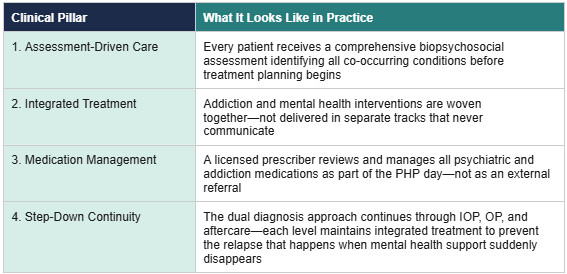
This model aligns with the Substance Abuse and Mental Health Services Administration's integrated treatment guidelines, which identify simultaneous treatment as the gold standard for co-occurring disorders — and distinguish it from sequential treatment (treating one condition first, then the other) and parallel treatment (treating both but in separate programs that don't coordinate).
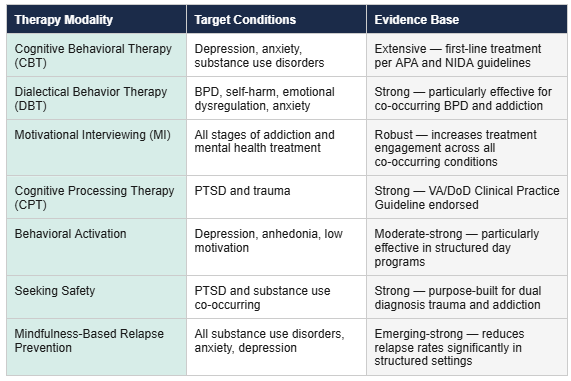
Evidence-Based Therapies Used in BeBold's Dual Diagnosis PHP
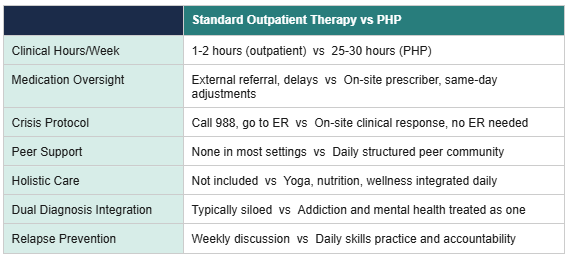
PHP for Mental Health vs Standard Outpatient Therapy: A Direct Comparison
The most common question we hear: 'Is PHP really necessary, or can I get the same help from my therapist?' For mild conditions, outpatient therapy is often sufficient. For moderate to severe co-occurring disorders — the clinical answer is clear. The American Psychological Association identifies treatment intensity as a key predictor of outcomes for moderate-to-severe conditions.
Virginia Mental Health and Addiction Statistics
The need for dual diagnosis care in Virginia is not theoretical. According to the Virginia Department of Health:
- Opioid-related ER visits in Hampton Roads have increased more than 50% in five years
- Fewer than 1 in 10 Virginians who need substance use treatment receive it
- Mental health conditions are the primary driver of long-term unemployment in Virginia
- Veterans in Hampton Roads — a disproportionately large population — have among the highest rates of PTSD and substance co-occurrence in the state
- Suicide rates in Virginia have risen alongside opioid and alcohol mortality — the overlap is significant

Insurance Coverage for Dual Diagnosis PHP in Virginia
Mental health treatment in PHP is covered by the same insurance provisions as addiction treatment. Under the Mental Health Parity and Addiction Equity Act (MHPAEA), insurers must cover mental health and substance use treatment at the same level as physical health care — including PHP.
- Virginia Medicaid: Dual diagnosis PHP is a covered benefit. Most patients pay $0.
- Medicare Part B: Covers PHP for both mental health and substance use conditions.
- Aetna, Cigna, Anthem/BCBS, UHC: All cover dual diagnosis PHP under MHPAEA.
- Tricare: Covers dual diagnosis PHP for veterans, active duty, and military dependents.
Verify your insurance coverage online — or call 757-716-0067. BeBold Recovery's billing team verifies your benefits within 24 hours, at no cost and with no commitment required.
Take the First Step Today
If you’re ready to explore your options — or just want to ask questions — reach out today. We’ll guide you with clarity, compassion, and confidence.
.svg)
or message us directly through our website
You don’t have to figure this out alone. Let’s take the next step — together.
Three entries: the BeBold Recovery blog itself (Ocegueda, N., 2026, April 18, with full URL), SAMHSA's co-occurring disorders resource, and NIMH's resource on substance use and co-occurring mental disorders.
Frequently Asked Questions

Related Blog Posts
.png)
How Long Does MAT Treatment Last?
Find out how long MAT treatment lasts in Virginia, what determines your duration, when tapering is appropriate, and how Be Bold Recovery structures your medication timeline.

PTSD and Substance Abuse: Getting Help for Both
Learn how PTSD and substance abuse are clinically connected and how Bold Recovery in Norfolk VA provides integrated trauma-informed treatment for both conditions simultaneously
.png)
Signs of Fentanyl Addiction: When to Get Help
Learn the signs of fentanyl addiction, how fentanyl differs from other opioids, and how Bold Recovery in Norfolk VA provides integrated fentanyl addiction treatment.