


Prescription Drug Addiction: Signs and Treatment in Virginia


Prescription Drug Addiction: Signs and Treatment in Virginia
Prescription drug addiction rarely begins with intent. It usually begins with a legitimate medical need, a legitimate prescription, and legitimate use. Somewhere along the way, tolerance builds, the dose creeps up, and the medication that was supposed to help becomes the problem.
If you or someone you love is caught in this pattern, you are not alone and you are not weak. Prescription drug addiction is one of the most common paths into substance use disorder in the United States. This guide covers the most commonly misused prescriptions, how legitimate use becomes addiction, warning signs, how to talk to your prescriber, and treatment options in Virginia.
SAFETY: Do not stop opioid or benzodiazepine prescriptions cold turkey. Benzodiazepine withdrawal can cause seizures and death. Opioid withdrawal is severe and can be dangerous with certain conditions. Any dose reduction should be medically supervised. Call your prescriber or a licensed treatment provider.
Most Commonly Misused Prescription Drugs
Three classes of prescription drugs account for most prescription addiction:
Opioids. Prescribed for acute pain, chronic pain, and post-surgical recovery. Common brand names include OxyContin (oxycodone), Vicodin and Norco (hydrocodone), Percocet (oxycodone with acetaminophen), morphine, fentanyl patches, and tramadol. Prescription opioid addiction has fueled the ongoing opioid crisis and often leads to heroin or illicit fentanyl use as prescriptions become harder to obtain.
Benzodiazepines. Prescribed for anxiety, panic disorders, insomnia, and seizures. Common brand names include Xanax (alprazolam), Valium (diazepam), Klonopin (clonazepam), Ativan (lorazepam), and Restoril (temazepam). Benzodiazepine dependence forms within weeks of daily use. Withdrawal is medically serious and can be fatal without supervised tapering.
Stimulants. Prescribed for ADHD and narcolepsy. Common brand names include Adderall (amphetamine), Ritalin and Concerta (methylphenidate), Vyvanse (lisdexamfetamine), and Focalin (dexmethylphenidate). Prescription stimulant misuse is common in college and workplace settings for perceived performance enhancement.
Other prescription drugs that can produce addiction include sleep medications (Ambien, Lunesta), muscle relaxants (Soma), and certain nerve pain medications (gabapentin, pregabalin). The pattern is similar across classes: tolerance builds, dose escalates, dependence forms.
How Prescription Drug Addiction Develops Even With Legitimate Use
The pattern is consistent across drug classes:
Stage 1 - Legitimate prescribed use. The medication addresses a genuine medical need at the prescribed dose.
Stage 2 - Tolerance builds. The same dose produces less effect over time. This is a normal physiological response, not misuse.
Stage 3 - Dose escalates. The patient takes more than prescribed, refills early, or requests dose increases. Sometimes the physician escalates. Sometimes the patient escalates on their own.
Stage 4 - Physical dependence forms. The body adapts to the drug's presence. Stopping produces withdrawal symptoms. Dependence is not addiction. It is physical adaptation.
Stage 5 - Addiction develops. Use becomes compulsive. The person continues use despite negative consequences. They may use for non-medical effects (euphoria, sleep, escape). Doctor-shopping, buying medications illegally, or transitioning to street drugs may follow.
Not everyone who takes a prescription opioid, benzodiazepine, or stimulant becomes addicted. Genetic vulnerability, mental health conditions, trauma history, and duration of use all affect the risk. Nobody predicts in advance who will develop addiction, which is why prescriber vigilance matters.
Warning Signs That Use Has Become Dependence or Addiction
Watch for these signs:
- Taking more than prescribed or more frequently than prescribed
- Using the medication for non-medical reasons (mood, sleep, energy, escape)
- Running out early or requesting early refills
- Seeing multiple prescribers for the same or similar medications (doctor-shopping)
- Filling prescriptions at multiple pharmacies
- Buying the medication from friends, family, or online sources
- Hiding use from family, prescribers, or others
- Experiencing withdrawal symptoms when the medication runs out
- Preoccupation with the medication (planning around it, worrying about supply)
- Continued use despite health, work, relationship, or financial consequences
- Failed attempts to cut back or stop
- Transitioning to illicit versions (heroin, illicit fentanyl, street stimulants)
Any three or more of these signs warrant clinical assessment. Denial is common. The pattern is often clearer to family than to the person using.
The Importance of Honest Conversations With Your Prescriber
Your prescriber is your first resource. Honest conversation about what is happening opens options:
- Adjustments to the current prescription (dose, timing, alternative medication)
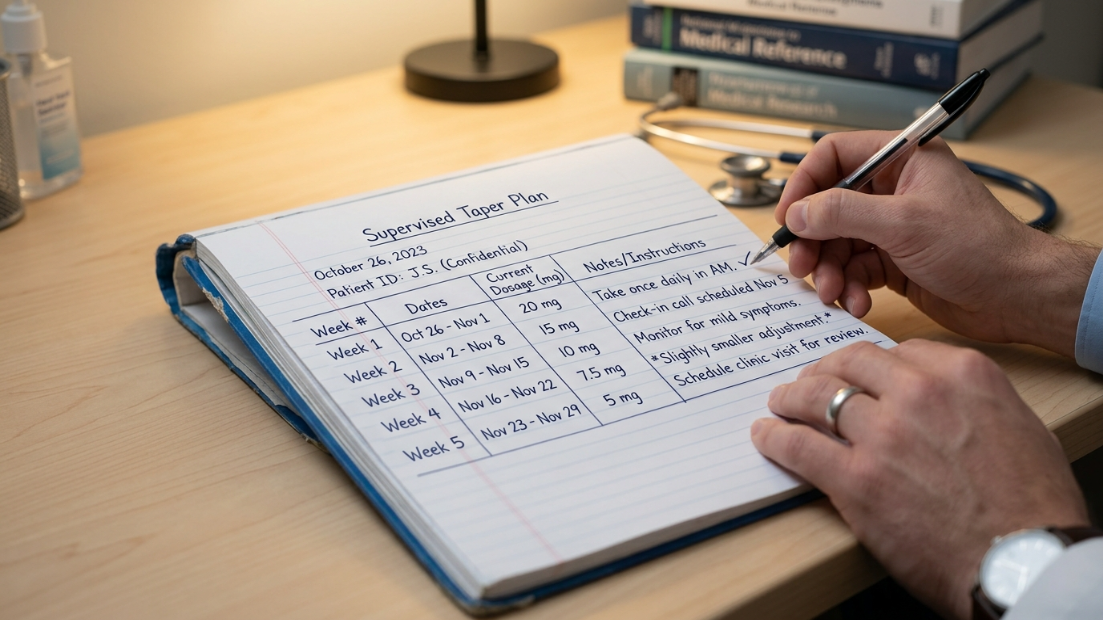
- A medically supervised taper plan
- Referral to a pain specialist, psychiatrist, or addiction medicine physician
- Referral to a specialty addiction treatment program
- Coordination with other providers (psychotherapy, physical therapy, alternative pain management)
- MAT options for opioid or benzodiazepine dependence
The conversation is not comfortable. Prescribers are not there to judge. Their job is to help you manage the situation medically. If your prescriber is not helpful or dismissive, seek a second opinion from an addiction medicine specialist.
Treatment Options for Prescription Drug Addiction in Virginia
Treatment typically involves several coordinated steps:
Medical detox or supervised taper. For opioids and benzodiazepines particularly, medical supervision during the reduction is often needed. Detox may be inpatient (for severe dependence) or outpatient with close monitoring.
PHP or IOP treatment. Partial Hospitalization (PHP) or Intensive Outpatient (IOP) programs provide structured therapy addressing the addiction and underlying conditions. Typical length is 30 to 90 days depending on severity.
Individual therapy. Ongoing individual therapy addressing the underlying condition (chronic pain, anxiety, ADHD, trauma) that led to prescription use.
MAT when indicated. Suboxone or naltrexone for opioid dependence. There is no FDA-approved medication for benzodiazepine or stimulant addiction, but supportive medications for anxiety or ADHD are available.
Peer support. AA, NA, Pills Anonymous, or SMART Recovery communities provide ongoing recovery community.
Coordinated pain or psychiatric care. The underlying condition that led to prescription use must be addressed. Otherwise the same pattern often recurs.
[BRAND CUSTOMIZATION: If BeBold Recovery has specific experience treating prescription drug addiction, particularly professionals or older adults who developed dependence from legitimate use, describe here. Include coordination with prescribers, PHP/IOP structure for prescription addiction, and specific therapies used.]
Tapering Safely vs. Quitting Cold Turkey
Tapering means slow, medically supervised dose reduction over weeks or months. The exact protocol depends on the drug, the dose, and the duration of use.
For opioids:
- Cold turkey causes severe withdrawal but is not typically life-threatening in otherwise healthy people
- However, post-abstinence overdose risk is high due to lost tolerance
- Medical taper or MAT (Suboxone, methadone) is significantly safer
For benzodiazepines:
- Cold turkey is dangerous and potentially fatal
- Withdrawal seizures can occur
- Slow medical taper (weeks to months) is the clinical standard
- The Ashton Manual is a widely used clinical protocol
For stimulants:
- Withdrawal is not typically medically dangerous but produces severe depression, fatigue, and cravings
- Taper is generally preferred but abrupt cessation is medically safe
Consult a licensed clinician before any dose reduction. The safe path exists. Take it.
Your Next Step
If you are worried about your prescription use or a loved one's, do not wait for a crisis. Call your prescriber for an honest conversation. If that is not possible or not enough, call a licensed Virginia provider today for a free confidential assessment. Treatment for prescription addiction is common, evidence-based, and often covered by insurance.
Take the First Step Today
If you’re ready to explore your options — or just want to ask questions — reach out today. We’ll guide you with clarity, compassion, and confidence.
.svg)
or message us directly through our website
You don’t have to figure this out alone. Let’s take the next step — together.
- Centers for Disease Control and Prevention. Prescription Drug Overdose. cdc.gov
- National Institute on Drug Abuse (NIDA). Prescription Drugs. nida.nih.gov
- Substance Abuse and Mental Health Services Administration (SAMHSA). Prescription Drug Misuse. samhsa.gov
- U.S. Food and Drug Administration. Prescribing Controlled Substances. fda.gov
- American Society of Addiction Medicine. Public Policy Statement on Prescription Drug Misuse. asam.org
- Ashton, C.H. Benzodiazepines: How They Work and How to Withdraw (The Ashton Manual). benzo.org.uk
- Virginia Department of Health. Prescription Monitoring Program. vdh.virginia.gov
- Virginia Board of Medicine. Prescribing Regulations.
- SAMHSA National Helpline. 1-800-662-HELP
- Code of Virginia § 38.2-3412.1. Coverage for Mental Health and Substance Use Disorders. law.lis.virginia.gov
Frequently Asked Questions

Related Blog Posts
.png)
Anxiety and Alcohol Abuse: Finding Help in Virginia
Learn how anxiety and alcohol abuse reinforce each other, why alcohol worsens anxiety long-term, and how Bold Recovery in Norfolk VA treats both simultaneously.

Cocaine Addiction Treatment Options in Virginia Beach
Cocaine addiction treatment in Virginia Beach: evidence-based therapies, treatment levels, fentanyl contamination risks, insurance coverage, and your next steps to recovery.

Can You Detox Safely at Home? Why Doctors Say No
Clinical answer to whether home detox is safe. Why doctors say no, what home detox kits get wrong, and how to access medically supervised detox in Virginia quickly.