


Signs of Fentanyl Addiction: When to Get Help


.png)
Fentanyl has changed the opioid crisis in ways that matter clinically and practically. It is 50 to 100 times more potent than morphine. Its half-life is short enough that withdrawal begins within 2 to 4 hours of the last dose. It has contaminated the illicit drug supply broadly enough that people who never intended to use fentanyl are now dependent on it.
In Norfolk, VA — where Virginia's opioid overdose data consistently shows fentanyl in the majority of deaths — recognizing the signs of fentanyl addiction and understanding when and how to get help is a matter of life and death.
Why Fentanyl Is Different From Other Opioids
Fentanyl's clinical profile creates a distinct treatment challenge. Its potency means tolerance develops rapidly and profoundly. Its short half-life means the cycle of use and withdrawal accelerates — people using illicit fentanyl often need to dose every 2 to 4 hours to prevent withdrawal symptoms. Its presence in counterfeit pills and in substances sold as other drugs means exposure is frequently unintentional.
The overdose risk from fentanyl is extreme because the margin between an effective dose and a lethal dose is narrow — far narrower than for heroin or prescription opioids. A quantity that produces intoxication one day may be lethal the next if the drug supply has changed in potency or contamination.
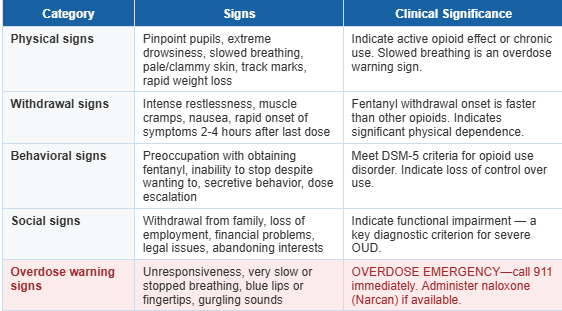
Signs of Fentanyl Addiction to Know
When Is the Right Time to Get Help?
The right time is before the next use.
Fentanyl use disorder does not follow a predictable decline. The person who uses fentanyl today and survives may not survive tomorrow — not because of behavioral change, but because the drug supply changed. The potency of illicit fentanyl is inconsistent. Each dose carries an overdose risk that no amount of tolerance fully protects against.
The DSM-5 criteria for opioid use disorder apply to fentanyl as they do to other opioids: if use is causing problems in health, relationships, or daily functioning and the person cannot stop despite wanting to, that is the clinical definition of a disorder requiring treatment.
You do not need to hit a defined low point. Recognizing the signs — in yourself or someone you care about — is sufficient reason to make the call.
How Bold Recovery Treats Fentanyl Addiction in Norfolk, VA
Fentanyl treatment at Bold Recovery is MAT-integrated by design. Buprenorphine (Suboxone) is the first-line medication for fentanyl use disorder — and clinical evidence supports higher doses than those typically used for other opioids because fentanyl's receptor affinity requires greater medication to achieve adequate suppression.
The clinical pathway at Bold Recovery includes:
- Medical assessment and MAT induction — buprenorphine dosing established before IOP or PHP programming begins
- Clinical evaluation for co-occurring conditions — PTSD, depression, and anxiety co-occur frequently in fentanyl use disorder populations
- Integrated IOP or PHP programming — individual therapy, group counseling, relapse prevention, and medication management running concurrently
- Naloxone (Narcan) training and distribution — every client and their family members learn overdose rescue
- Discharge planning with continued MAT — fentanyl use disorder requires sustained medication support, not short-term treatment
Take the First Step Today
If you’re ready to explore your options — or just want to ask questions — reach out today. We’ll guide you with clarity, compassion, and confidence.
.svg)
or message us directly through our website
You don’t have to figure this out alone. Let’s take the next step — together.
- Virginia Department of Health (VDH). (2024). Drug Overdose Data Dashboard — Fentanyl-Involved Deaths. Richmond, VA.
- SAMHSA. (2023). Medications for Opioid Use Disorder. Treatment Improvement Protocol (TIP) Series No. 63. Rockville, MD.
- American Psychiatric Association (APA). (2022). Diagnostic and Statistical Manual of Mental Disorders (DSM-5-TR). 5th ed., Text Revision. Washington, D.C.
- Suzuki, J. & El-Haddad, S. (2017). A review: Fentanyl and non-pharmaceutical fentanyls. Drug and Alcohol Dependence, 171, 107-116.
- National Institute on Drug Abuse (NIDA). (2024). Fentanyl Drug Facts. NIH. Bethesda, MD.
- American Society of Addiction Medicine (ASAM). (2023). The ASAM Criteria: Treatment Criteria for Addictive, Substance-Related, and Co-Occurring Conditions. 4th ed.
Frequently Asked Questions

Related Blog Posts
.png)
What Are the Signs of Meth Addiction?
Learn the physical, behavioral, and psychological signs of meth addiction, how meth affects the brain long-term, and how Bold Recovery in Virginia provides integrated meth addiction treatment

How Long Does an IOP Program Last?
Find out how long IOP programs last in Virginia, what affects duration, and how Be Bold Recovery structures your recovery timeline from start to discharge

Does Blue Cross Blue Shield Cover Rehab in Virginia?
Find out if Blue Cross Blue Shield covers drug and alcohol rehab in Virginia, what levels of care are included, and how to verify your BCBS benefits at Bold Recovery