


Suboxone vs. Methadone: Which Is Right for You?


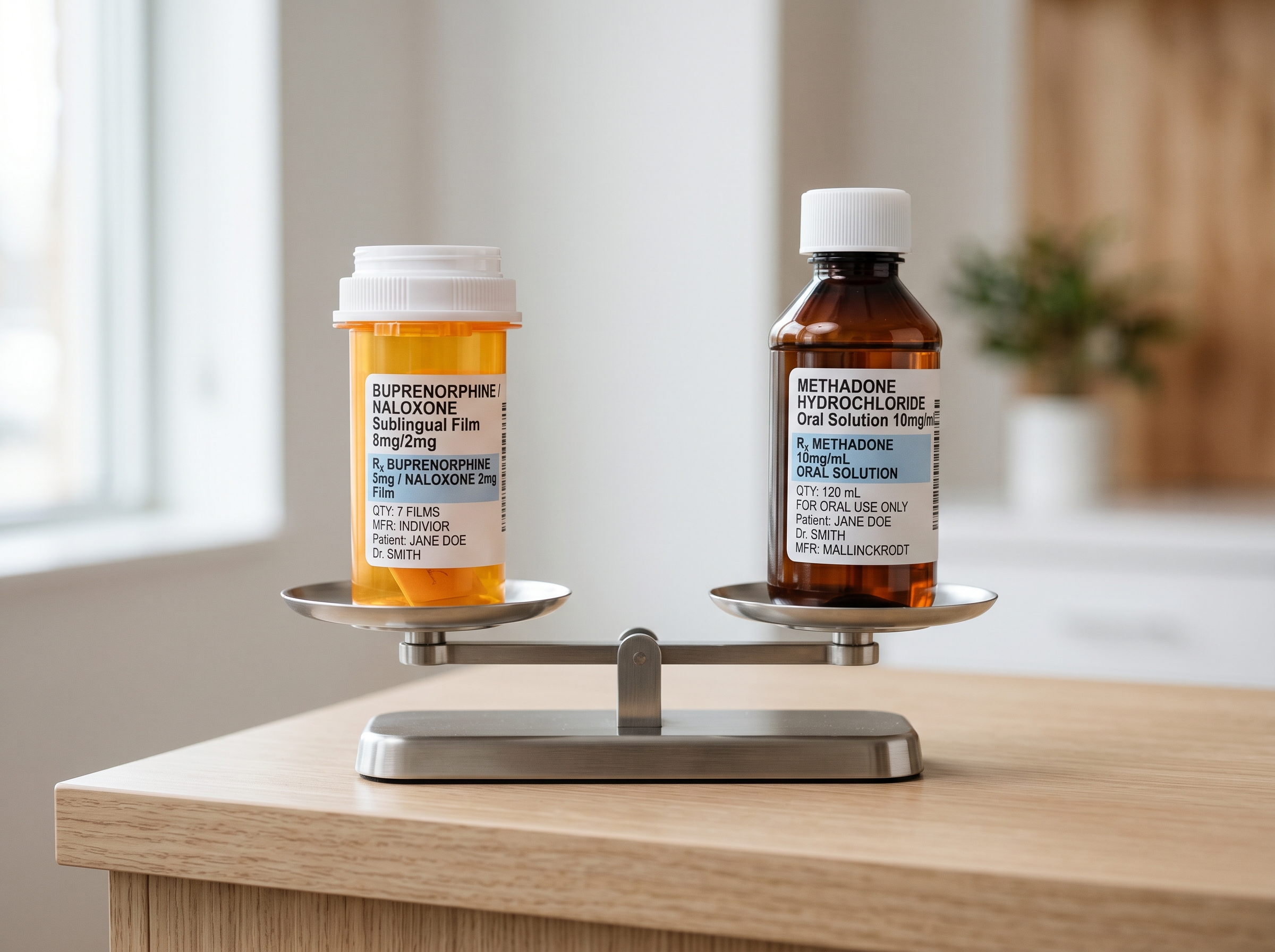
Both are FDA-approved. Both are evidence-based. Both save lives. The question is not which one is better—it is which one is better for your specific clinical situation.
This comparison exists because the two medications work differently, are administered differently, and are appropriate for different points on the severity spectrum of opioid use disorder. Understanding those differences is what makes the choice a clinical one rather than a personal preference.
The Core Difference in One Sentence
Suboxone (buprenorphine-naloxone) is a partial opioid agonist dispensed in an office-based setting. Methadone for opioid use disorder is a full opioid agonist dispensed daily at a federally certified opioid treatment program clinic.
That single distinction — office-based versus clinic-based — has major practical implications for who each medication is suited to.
Suboxone vs. Methadone: Full Comparison

When Suboxone Is Typically the Better Fit
Suboxone is generally the first-line option in office-based MAT settings. It is the right choice when:
- The severity of opioid use disorder is mild to moderate
- You have a stable living situation that supports self-managed medication
- Work, family, or other commitments make daily clinic attendance impractical
- You have not previously failed buprenorphine treatment
- The ceiling effect and lower misuse potential are clinically desirable
When Methadone Is Typically the Better Fit
Methadone is often the stronger clinical choice when:
- OUD is severe, long-standing, or involves high-potency opioids like fentanyl
- Previous buprenorphine treatment was ineffective or produced inadequate withdrawal suppression
- Daily clinical contact and structure are beneficial to your recovery
- You are in a living situation or social environment where self-administered medication carries significant diversion or misuse risk
- Pregnancy — methadone has a longer evidence record in pregnancy, though buprenorphine is also approved
Which One Does Bold Recovery Offer in Virginia?
Bold Recovery prescribes Suboxone (buprenorphine-naloxone) as part of an integrated IOP or PHP treatment program in Virginia. For clients for whom methadone is the clinically appropriate choice, Bold Recovery's care team coordinates referral to a certified OTP clinic while maintaining the client's participation in behavioral treatment programming.
No client is turned away from clinical services based on which MAT medication they are on or have been prescribed elsewhere.
Take the First Step Today
If you’re ready to explore your options — or just want to ask questions — reach out today. We’ll guide you with clarity, compassion, and confidence.
.svg)
or message us directly through our website
You don’t have to figure this out alone. Let’s take the next step — together.
- SAMHSA. (2023). Medications for Opioid Use Disorder. Treatment Improvement Protocol (TIP) Series No. 63. Rockville, MD.
- Mattick, R.P. et al. (2014). Buprenorphine maintenance versus placebo or methadone maintenance for opioid dependence. Cochrane Database of Systematic Reviews, 2, CD002207.
- Sordo, L. et al. (2017). Mortality risk during and after opioid substitution treatment. BMJ, 357, j1550.
- American Society of Addiction Medicine (ASAM). (2023). The ASAM Criteria: Treatment Criteria for Addictive, Substance-Related, and Co-Occurring Conditions. 4th ed.
- U.S. Food and Drug Administration. (2023). Buprenorphine and methadone prescribing information and FDA guidance on opioid use disorder treatment. Silver Spring, MD.
- Virginia Department of Medical Assistance Services. (2024). ARTS Program Coverage for MAT Medications. Richmond, VA.
Frequently Asked Questions
